

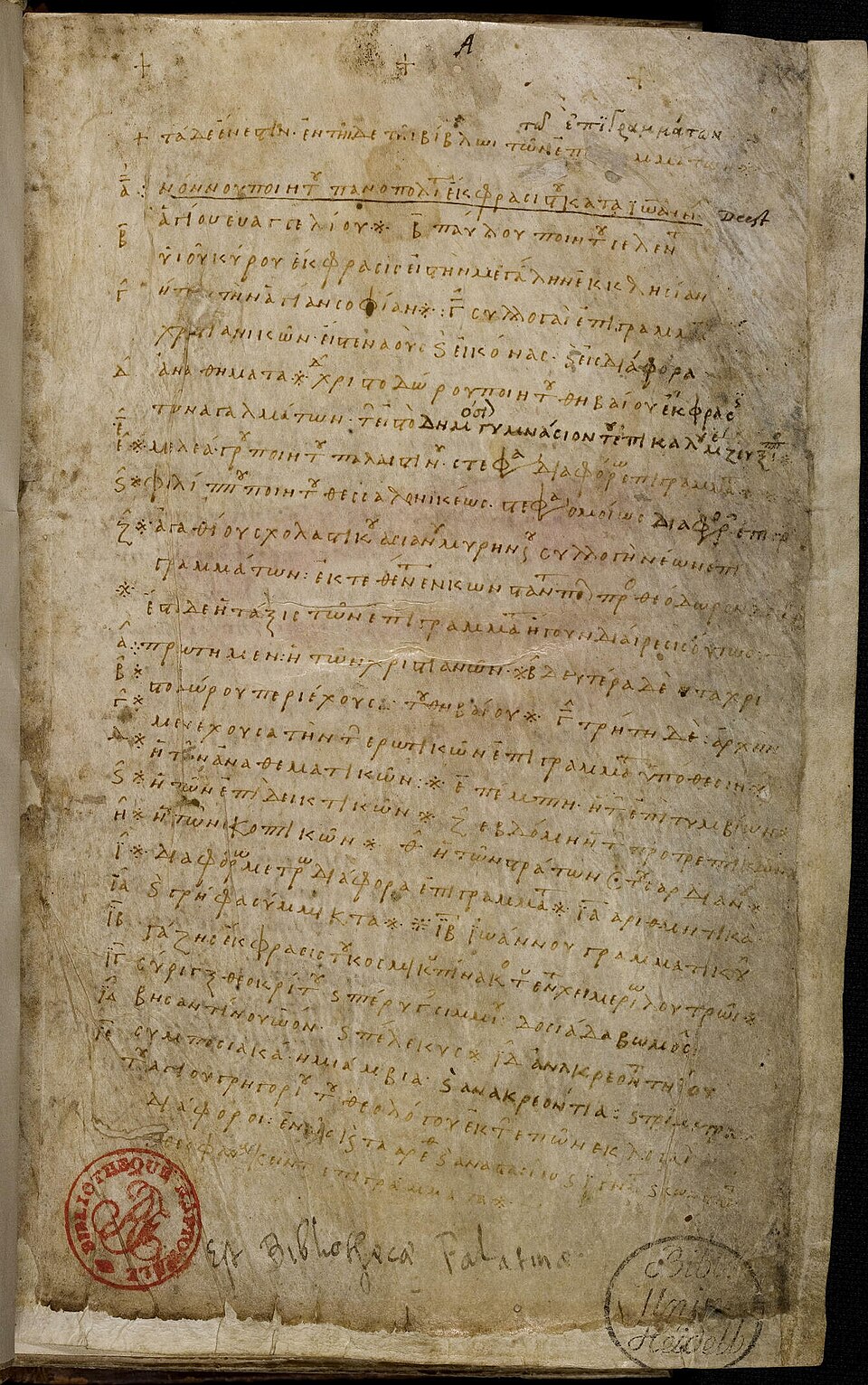
Greek Anthology
Greek · Poetry · Epigram · Epigram; Poetry · Love Poem
5 works · 42,208 aligned sentences
Greek Anthology 1
Books 1 through 6 of the Greek Anthology form the opening portion of a vast collection of short verse (epigrams) spanning from classical antiquity to the Byzantine era. Composed predominantly in elegiac couplets, these poems cover a remarkable range of human experience, from pious devotion and mythic heritage to secular desire and humble labor. The collection begins in Book 1 with Christian epigrams commemorating the foundation of churches, biblical narratives, and saints in Constantinople. Books 2 and 3 then transition into vivid artistic descriptions (ekphrasis), capturing the statues of mythological heroes, philosophers, and poets in a public bath, as well as temple reliefs depicting filial devotion. Following the editorial prefaces and dedications of ancient anthologists in Book 4, Book 5 plunges into passionate love poetry that explores the madness of Eros, clandestine meetings, the dread of aging, and romantic betrayal. Finally, Book 6 gathers votive epigrams in which fishermen, farmers, artisans, soldiers, and retired courtesans dedicate the tools of their trades and modest offerings to the gods. Through this interplay of the sacred and the profane, the anthology preserves the vivid emotional, spiritual, and daily realities of the Greek-speaking Mediterranean.
Poetry67 chunks · §1.1-1.9–§6.342-6.3588,817 aligned sentencesRead →Greek Anthology 2
The Greek Anthology, Volume 2 brings together epigrams of mourning and remembrance, comprising Book 7, the traditional collection of sepulchral epigrams, and Book 8, devoted entirely to the funerary poems of Gregory of Nazianzus. Spanning from classical and Hellenistic Greece to late antique Christian culture, these concise poems encompass a wide array of reflections on mortality. Book 7 commemorates illustrious poets such as Homer and Sappho, celebrated philosophers, and fallen warriors, while equally turning its gaze toward untimely brides, shipwrecked sailors, faithful slaves, and cherished animals like cicadas and hounds. In Book 8, Saint Gregory mourns his lifelong friend Saint Basil the Great, his devout parents, and prematurely lost siblings with poignant Christian piety, concluding with fierce indictments of grave robbers driven by greed. Across its verses, the anthology charts a vast landscape of human grief, transience, and remembrance, capturing both the poignant beauty of classical resignation and the spiritual hope of early Christian faith.
Poetry67 chunks · §7.1-7.12–§8.229-8.2549,849 aligned sentencesRead →Greek Anthology 3
This collection comprises Book 9 of the Greek Anthology, gathering a vast array of demonstrative and descriptive epigrams that exhibit the rhetorical and poetic ingenuity of classical antiquity. Spanning from the Hellenistic period to the early Byzantine era, diverse poets engage with natural phenomena, mythological lore, moral lessons, and praises of great thinkers and literary forebears. The earlier sections feature striking fables of beasts, poignant reflections on shipwrecks and human fortune, as well as dramatic ethopoeiae articulating the speeches of mythic heroes at pivotal moments. As the collection progresses, the focus turns toward elaborate descriptions (ekphraseis) of fountains, public baths, grand architecture, and exquisite works of art. A celebrated centerpiece is the series of epigrams on Myron's bronze cow, in which poets continually marvel at the illusion of life achieved by artistic craft. Concluding with tributes to Late Antique urban monuments, imperial foundations, and Christian liturgical objects, the work presents an encyclopedic tapestry of Greek epigrammatic art contemplating nature, fate, and visual marvels.
Poetry57 chunks · §9.1-9.14–§9.809-9.8278,456 aligned sentencesRead →Greek Anthology 4
The fourth volume of the Greek Anthology comprises Books 10 through 12, bringing together a diverse array of epigrams composed by poets ranging from the Hellenistic period to Late Antiquity. This collection encompasses moral and philosophical reflections (Book 10), satirical and convivial verses (Book 11), and the Musa Paidike (the "Boyish Muse"), a dedicated cycle of pederastic love poetry primarily compiled by Strato of Sardis (Book 12). The volume opens with sober musings on the cruelty of Fortune, the inevitability of aging and death, and the vanity of wealth, urging moderation and detachment in the face of human insignificance. It then shifts briskly to vibrant comedic satire, relentlessly mocking quack doctors, wretched poets, misers, and grotesque bodily traits, while celebrating the immediate pleasures of wine and banquets. The latter part turns to the trials and ecstasies of homoerotic desire, depicting the fleeting bloom of youth, the torment of fickle affections, and the sorrowful demise of romantic pursuit marked by the first growth of a boy's beard. Across its varied registers, the anthology presents an enduring portrait of mortal vulnerability and vitality, balancing the somber contemplation of life's brevity with playful laughter and passionate delight.
Poetry53 chunks · §10.1-10.11–§12.246-12.2588,575 aligned sentencesRead →Greek Anthology 5
This volume comprises Books 13 through 16 of the Greek Anthology, bringing together an extraordinary range of epigrams that showcase metrical experimentation, intellectual ingenuity, and the poetic description of visual art. It opens in Book 13 with varied and unconventional meters composed by Classical and Hellenistic masters, followed in Book 14 by mathematical puzzles, riddles, and historical oracles delivered by legendary seers. Book 15 features Hellenistic pattern poems (technopaegnia)—verses shaped visually into objects such as wings, an altar, or an egg—alongside late antique and Byzantine Christian verses and epitaphs. The expansive concluding Book 16, known as the Planudean Appendix, consists largely of poems dedicated to works of art, vividly celebrating statues of gods and heroes like Aphrodite, Eros, and Heracles, as well as portraits of celebrated poets, philosophers, and Byzantine charioteers. Moving from playful arithmetic to profound ekphrasis, the collection captures the versatile imagination and stylistic virtuosity of the Greek epigrammatic tradition from antiquity to the Byzantine era.
Poetry45 chunks · §13.1-13.19–§16.374-16.3886,511 aligned sentencesRead →