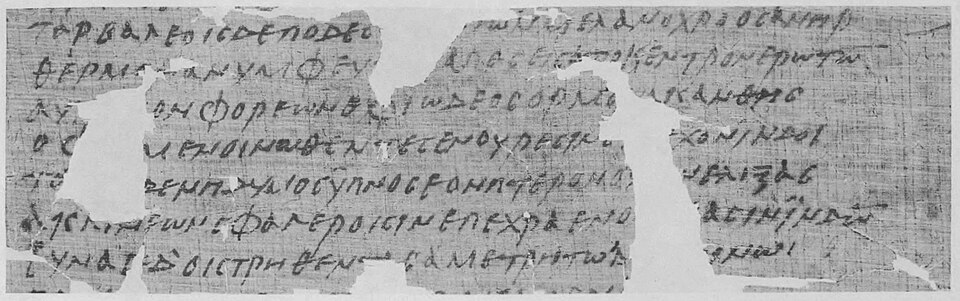
W. Schubart · Public domain ↗
Greek · Poetry · Geography · Mythography
1 work · 31,641 aligned sentences
Birth: 500 AD / Death: 500 AD
Akhmim → Roman Egypt · poet · writer
Read more on Wikipedia ↗
Comprising forty-eight books, the Dionysiaca is the longest surviving epic poem from classical antiquity, recounting the birth, earthly exploits, Indian campaign, and ultimate deification of Dionysus (Bacchus), the god of wine and sacred frenzy. The epic opens with sweeping cosmic and mythological preludes—including Zeus's victory over the monstrous Typhoeus, the foundation of Thebes by Cadmus, and the suffering of the elder god Zagreus—before narrating Dionysus's miraculous birth from Zeus's thigh. After discovering wine through grief over the death of his beloved youth Ampelos, Dionysus receives a divine mandate from his father to lead a host of satyrs, nymphs, and frenzied maenads on a grand expedition to subdue India. The vast middle portion of the work dramatizes the protracted war against the Indian king Deriades, featuring fierce land and naval battles, elaborate funeral contests, and the vengeful machinations of Hera that temporarily plunge the god into madness. Returning west in triumph, Dionysus travels across Greece, punishing the defiant King Pentheus in Thebes and quelling civil conflicts and giant rebellions to establish his mystical cult throughout the mortal realm. Concluding with the harrowing tale of the huntress Aura and the birth of Iacchus, Dionysus overcomes every trial and ascends in glory to take his eternal seat among the Olympian gods.