

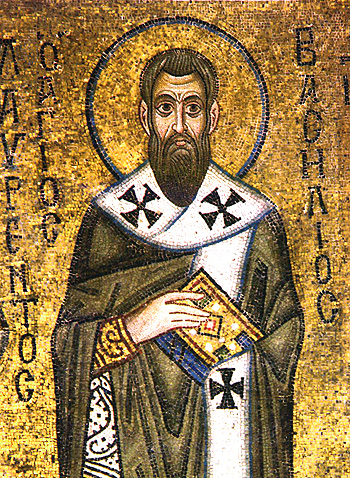
Basil of Caesarea
Greek · Others · Philosophy · Art Criticism · Theology
2 works · 25,640 aligned sentences
Birth: 329 AD / Death: 379 AD
Kayseri · theologian · Catholic priest · philosopher
Address to Young Men: On the Right Use of Greek Literature
This work is a pedagogical address by Basil of Caesarea, in which he advises Christian youths—traditionally identified as his nephews—on how to derive moral and intellectual profit from pagan Greek literature. The author presents secular learning as a preliminary training that prepares the soul for the higher truths of the Christian life, likening external wisdom to the leaves that protect and adorn the fruit. He famously urges readers to emulate bees, which gather only nectar from flowers, by discerningly adopting tales and maxims that praise virtue (arete) while shunning depicted vices and falsehoods. To illustrate this, Basil draws upon the poetry of Homer and Hesiod, as well as the historical conduct of figures like Socrates and Pericles, arguing that philosophical virtue must be realized through action rather than mere words. In the latter sections, he warns against bodily self-indulgence and the pursuit of wealth, exhorting the young to care above all for the immortal soul. The work concludes with an earnest appeal to make good use of these literary preparatory sketches as provisions for eternal life and to choose the path of highest virtue.
Others11 chunks · §1.1-1.5–§10.1-10.8771 aligned sentencesRead →Letters
This collection comprises the extensive correspondence of Basil of Caesarea, a fourth-century Cappadocian church father, addressed to civil magistrates, fellow bishops, ascetic communities, and close friends. The earlier letters articulate the ideals of monastic retirement, emphasizing inward serenity (*hesychia*), contemplative discipline, and practical rules for communal life. Following his elevation to the bishopric of Caesarea, Basil confronts the fierce theological turbulence of the Arian crisis, championing the Nicene confession of the Son's consubstantiality (*homoousios*) with the Father, defending the divinity of the Holy Spirit, and refining the distinction between substance (*ousia*) and person (*hypostasis*). Alongside these doctrinal polemics, the letters preserve important canonical rulings on penance, detail the administration of charitable hospices, and petition regional authorities to alleviate the oppressive taxes and grievances of his flock. Basil also labors tirelessly to heal the Meletian schism in Antioch and safeguard the peace of the Eastern churches through frequent appeals and embassies sent to Athanasius of Alexandria and the Western episcopate. Marked by deep pastoral vigilance despite chronic illness and personal betrayals, the correspondence portrays an enduring struggle to secure church unity, theological orthodoxy, and genuine Christian charity.
Theology259 chunks · §1–§366-36824,869 aligned sentencesRead →