

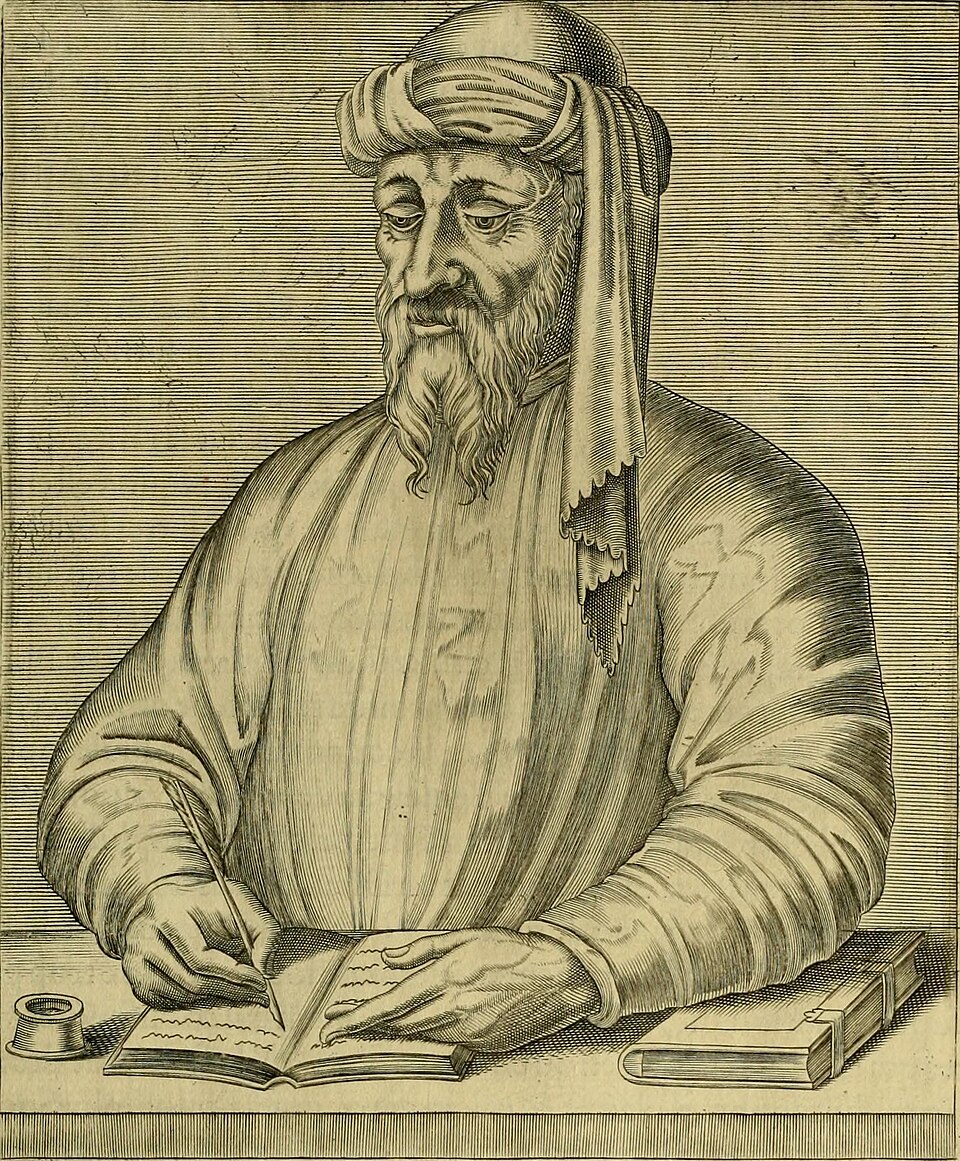
Porphyry
Greek · Philosophy · Commentary · Ethics
2 works · 7,983 aligned sentences
Birth: c. 234 AD / Death: c. 305 AD
Tyre → Rome · philosopher · music theorist · historian
Commentary on Aristotle's Categories
This commentary by the Neoplatonist philosopher Porphyry elucidates the fundamental concepts of Aristotle's Categories in an accessible pedagogical format. Structured as a dialogue where an interlocutor raises questions or objections and a respondent provides rigorous answers, the text defends Aristotle's logic against criticisms from later thinkers, particularly the Stoics. Porphyry begins by defining the work's primary scope: it does not classify entities directly, but rather categorizes significant utterances in their primary application to things, before clarifying preparatory distinctions such as homonyms, synonyms, and the fourfold division of beings based on inherence and predication. The treatise then systematically examines the principal categories—substance, quantity, relation, and quality—analyzing their distinct characteristics, such as receptivity to contraries or degrees, and resolving intricate puzzles regarding their boundaries. Finally, it briefly surveys the remaining six categories, including acting, being acted upon, and posture. Through these analyses, Porphyry successfully demonstrates the coherence and systematic rigor of Aristotelian logical theory.
Philosophy62 chunks · §55.3-56.32–§141.6-142.146,953 aligned sentencesRead →Isagoge
This work is a logical treatise composed as an introductory guide to understanding Aristotle's Categories, as well as the fundamental procedures of definition, division, and proof. Addressing Chrysaorius at the outset, Porphyry sets aside profound metaphysical disputes concerning the reality of universals, choosing instead to examine the five basic logical terms—the predicables—from a practical, logical standpoint. The first half sequentially defines genus, species, difference (differentia), property, and accident, articulating their hierarchical relationships from supreme genera down to infima species. Particular focus is placed on difference, detailing its role in dividing higher genera and constituting lower species, as well as distinguishing it from accidental variation. The latter half systematically examines all ten possible pairwise combinations among the five predicables, cataloging their exact commonalities and distinctions. By completing this rigorous comparison, the work clearly delineates the boundaries of these concepts, establishing a foundational framework for categorical analysis and formal reasoning.
Philosophy11 chunks · §1.3-1.16–§20.11-22.131,030 aligned sentencesRead →