

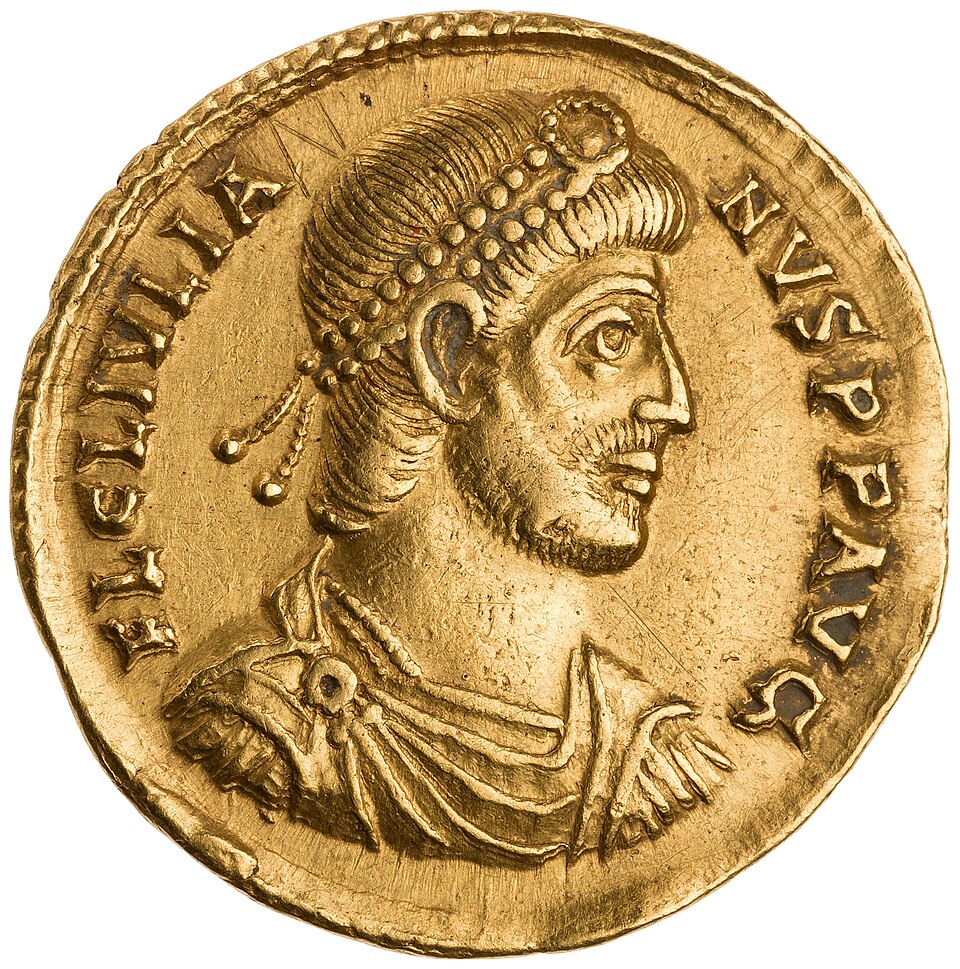
Julian
Greek · Theology · Philosophy · Ethics · Others
14 works · 21,904 aligned sentences
Against the Galileans
In Against the Galilaeans, the Roman emperor Julian systematically refutes Christian doctrine to champion the superiority of traditional polytheism and Hellenic civilization. Adopting a rigorous polemical approach, Julian closely analyzes passages from both the Old and New Testaments, contrasting them with classical Greek thought, particularly Plato's Timaeus. The work begins by criticizing the Genesis creation narrative and the Garden of Eden as crude myths, arguing that the cosmic order is governed by a transcendent creator alongside subordinate guardian deities assigned to each nation. Julian contends that the God of Israel is merely a local, ethnic deity rather than the universal creator, contrasting the modest cultural achievements of the Hebrews with the profound philosophical, political, and scientific attainments of Greco-Roman civilization. Turning to Christian practice and theology, he exposes what he regards as glaring contradictions: Christians have discarded the eternal Mosaic law and traditional sacrificial rites while distorting Hebrew prophecy to deify Jesus. Ultimately, Julian denounces the Christians as apostates who absorbed only the worst vices of Judaism and Hellenism, calling for a return to rational philosophical piety and ancestral religious observance.
Theology21 chunks · §1-5–§62-652,346 aligned sentencesRead →Beard-Hater
This work is a prose satire by the Roman Emperor Julian, written during his stay in Antioch as a self-deprecating yet biting response to the citizens who mocked his ascetic habits and philosopher-like appearance. Adopting an ironic posture of self-mockery rather than imperial wrath, the author begins by ridiculing his own shaggy beard, coarse manners, and indifference to public spectacles like the theater and chariot races. In the body of the work, Julian recounts how his strict upbringing under the tutor Mardonius shaped his austere character, contrasting his philosophical ideals of duty and moderation with the luxurious, undisciplined life of Antioch. He sharply exposes the citizens’ neglect of the traditional gods, particularly the abandoned festival of Apollo, while condemning their ingratitude toward his administrative efforts, such as famine relief and price controls. Refusing to alter his way of life or lower himself to violent retribution, Julian concludes with bitter disappointment, resolving to abandon the ungrateful city to its own folly.
Others16 chunks · §1-3–§42-441,484 aligned sentencesRead →Consolation to Himself on the Departure of Sallust
This work is a prose consolation written by Julian to soothe his own grief upon the departure of his most trusted friend and companion, Sallustius. At the outset, Julian expresses the profound solitude of losing a loyal comrade who shared in his toils, turning to myth, Homeric poetry, and Plato to ask how his troubled soul might find peace through philosophical reflection. He then examines historical parallels such as Scipio and Laelius, as well as Pericles and Anaxagoras, arguing that true friendship transcends physical separation through the intellectual and moral communion of virtuous minds. Drawing further upon the example of Odysseus, he reminds himself to face isolation resolutely, guided by inner reason and divine favor rather than yielding to despair. The discourse concludes on a note of enduring trust, as Julian offers prayers for his friend's safe voyage and swift return.
Philosophy6 chunks · §1-2–§7-8488 aligned sentencesRead →Hymn to King Helios
This work is a philosophical and theological prose hymn in which the Roman emperor Julian praises Helios, the sovereign Sun God who illumines and governs all things. Prompted by both personal devotion since childhood and imperial duty, the author articulates his praise in the form of a formal oration, drawing substantially upon the Neoplatonic teachings of Iamblichus. In the first part of the discourse, Julian establishes that Helios, begotten by the supreme Good or the One, serves as an essential mediating mean between the intelligible realm of the gods and the visible cosmos, being fundamentally identical to traditional deities such as Zeus and Apollo. The central section examines Helios’s cosmic and hypercosmic powers and activities, integrating astronomical observations, mythical allegories, and mystery doctrines to explain his governance of planetary spheres, the zodiac, and seasonal cycles. Julian then turns to the terrestrial sphere, demonstrating how Helios bestows life and wisdom upon humankind while fundamentally sustaining Rome’s origins, laws, and religious institutions, including the legacy of Romulus. The oration concludes with a solemn prayer for the preservation of the Roman state, guidance in the emperor’s own life, and the ultimate ascent of his soul to the divine presence after death.
Poetry15 chunks · §1-4–§43-441,171 aligned sentencesRead →Hymn to the Mother of the Gods
This work is a prose hymn composed by the Roman Emperor Julian, presenting a philosophical and theological interpretation of the mysteries of the Mother of the Gods (Cybele) and Attis through Neoplatonic metaphysics. Julian begins by recounting the origins of the cult and its arrival in Rome, rejecting the skepticism of intellectuals who dismiss myth as absurd fable by arguing that mythical narratives are deliberate symbols designed to reveal eternal metaphysical truths. He defines Attis as the demiurgic intellectual principle descending into matter to order it, and the Great Mother as the transcendent fountain of intelligible gods and supreme Providence, interpreting Attis's mythic castration as the halting of indefinite descent and a return to the One. The treatise then examines the rituals of the vernal equinox and the philosophical rationale behind specific dietary taboos, demonstrating how these observances purify the spirit (pneuma) and lead both soul and body toward salvation. Julian concludes by synthesizing the cosmic roles of related deities and offering a solemn prayer to the Mother of the Gods for the preservation of the Roman realm and the spiritual ascent of his own soul.
Poetry11 chunks · §1-2–§19-20975 aligned sentencesRead →Letter to the Senate and the People of Athens
This work is an open letter addressed by the Roman Emperor Julian to the Senate and People of Athens, vindicating the justice of his cause. Writing in the form of a rhetorical defense, Julian explains the circumstances that compelled him to accept the imperial title of Augustus and march against his cousin, Emperor Constantius II. He begins by praising Athens' ancient reverence for justice, contrasting this virtue with the cruelty of Constantius, who slaughtered Julian's family, kept him in confinement, and unjustly executed his brother Gallus. Julian then recounts his appointment as Caesar and his dispatch to Gaul, where, despite constant surveillance and hostility from court intrigue, he achieved brilliant military victories against Germanic tribes and restored the frontier. He details how Constantius's suspicious order to recall the elite troops sparked a mutiny, leaving Julian no choice but to accept the soldiers' divine proclamation of him as emperor. The letter concludes by justifying his current march on the grounds that Constantius rejected all peaceful overtures, solemnly entrusting his righteous cause and future to the guidance of the gods before the Athenian public.
Others10 chunks · §1–§12-13824 aligned sentencesRead →Letter to Themistius
This work is a philosophical letter written by the Roman emperor Julian to the philosopher and orator Themistius. Julian begins by expressing his deep anxiety and bewilderment regarding Themistius's overwhelming praise and lofty expectations, which compared him to ancient legislators and heroic philosopher-kings. Drawing upon Plato and Aristotle, Julian emphasizes the crushing weight of royal duty, the frailty of human nature, and the unpredictable power of fortune in political affairs. He challenges the claim that the active political life is inherently superior to the contemplative life, citing Socrates, who possessed no imperial power yet achieved greater moral triumphs than conquerors like Alexander. Julian clarifies that his hesitation before the demands of supreme rule stems not from indolence or cowardice, but from a sober recognition of his own limitations and the divine demands of just governance. The letter concludes with Julian placing his trust in divine providence while seeking continued philosophical guidance and friendship.
Others7 chunks · §1-2–§11-13491 aligned sentencesRead →Letters
The Letters (Epistulae) of the Roman Emperor Julian brings together a rich collection of official edicts, administrative mandates, and personal correspondence addressed to philosophers, provincial officials, civic communities, and intimate friends. The collection reflects the emperor's multifaceted efforts to revive traditional polytheism while managing the vast administrative and cultural affairs of the late empire. Early missives outline strict ethical guidelines for pagan priests, demanding moral purity and active philanthropy to match Christian charity, alongside fervent letters celebrating philosophy and friendship with thinkers such as Maximus and Iamblichus. The central portions focus on Julian's controversial religious and civic governance, featuring the edict barring Christian teachers from instructing classical literature, orders for the expulsion of Bishop Athanasius of Alexandria, and directives concerning municipal councils and taxation. In the later letters, playful literary essays on topics such as dried figs and numerology appear alongside the tense logistical and ceremonial realities of his march toward the Persian frontier. The collection ultimately presents a vivid self-portrait of an idealistic ruler striving to integrate classical culture (paideia) and Hellenic piety into the practical governance of his realm.
Others99 chunks · §frag_89b.1-frag_89b.3–§83.15,143 aligned sentencesRead →On the Deeds or Kingship of the Emperor Constantius
This oration examines the military achievements and virtues of the Roman emperor to investigate the true nature of kingship (basileia). Adopting the form of an imperial panegyric, the author rejects the conventional image of rulers who boast of external wealth and noble lineage, presenting instead an ideal ruler founded on inner virtue and piety. The first half of the speech compares the emperor with Homeric heroes, detailing military feats such as the defensive campaign against the usurper Magnentius and the defense against the Sasanian siege of Nisibis, while also praising the power of bloodless eloquence. In the middle section, philosophical arguments are introduced to warn against enslavement to wealth and power, contending that true kingship requires temperance, justice, adherence to law, and pastoral care for subjects. The latter half highlights the emperor's clemency in pardoning the children and associates of defeated rebels, illustrating the realization of the four cardinal virtues—justice, temperance, courage, and wisdom. The speech concludes by extolling the emperor's personal asceticism and endurance as the embodiment of divine order on earth.
Rhetoric28 chunks · §1–§38-391,879 aligned sentencesRead →Panegyric in Honour of Constantius
This work is a formal panegyric addressed by the future emperor Julian to his cousin and supreme ruler, the emperor Constantius II. Setting aside empty rhetorical embellishment, the speaker opens by proposing a philosophical standard that values inner virtues of the soul above mere outward military glory. The first half of the speech recounts Constantius's noble lineage, the legacy of his father Constantine the Great, his disciplined upbringing, and his decisive generalship along the eastern frontier against the Sasanian Persians. The narrative then turns to the civil strife in the West, detailing how the emperor subdued usurpers like Vetranio and Magnentius through a combination of bloodless eloquence and military triumph at the Battle of Mursa. In the conclusion, Julian praises Constantius's moderation, justice, and clemency toward friends and subjects alike, culminating in an idealized portrait of a ruler who governs by both wisdom and virtue.
Rhetoric22 chunks · §1–§38-391,787 aligned sentencesRead →Panegyric in Honour of the Empress Eusebia
This speech is a classical panegyric (encomium) delivered by Julian, the future emperor, in honour of Empress Eusebia, wife of Emperor Constantius II, to express public gratitude for her virtues and her benevolence toward him. The author begins by asserting the moral duty of acknowledging received benefits, arguing that female virtue is as worthy of praise as male virtue, and proceeds to highlight Eusebia's noble lineage, her upbringing in Thessalonica, and her exceptional character. In the middle section, Julian looks past the external splendour of the imperial wedding to praise her moderating influence on the emperor, her compassionate intervention in trials, and her fair distribution of honours. He then movingly recounts his personal debts to her, recalling how she cleared him of the emperor's suspicions, secured him leave to study philosophy in Greece, gifted him classical texts, and supported his elevation to Caesar. Concluding the address, Julian contrasts her modest excellence with mythical or historical women renowned for strife or vanity, affirming that Eusebia's true glory resides in her justice, temperance, and restorative kindness toward the afflicted.
Rhetoric14 chunks · §1–§18-19965 aligned sentencesRead →The Caesars
This work is a satirical prose dialogue by Emperor Julian that gathers the Roman emperors and Alexander the Great at a celestial banquet hosted by Romulus to judge their virtues and vices. As each sovereign enters, the witty Silenus subjects them to sharp and irreverent mockery, purging the tyrants and incompetent rulers from the company of the gods. To determine the greatest ruler worthy of joining the divine assembly, a contest of speeches and interrogation is held among Alexander, Julius Caesar, Augustus, Trajan, Marcus Aurelius, and Constantine. While the conquerors boast of their military triumphs and worldly power only to have their inner vanities exposed by Silenus, the philosopher-emperor Marcus Aurelius defends his devotion to the emulation of the gods and detachment from desires. In the end, Marcus is unanimously proclaimed victor by the gods, Constantine is ridiculed for his self-indulgence, and the work concludes with Hermes delivering a personal divine injunction to Julian himself.
Others13 chunks · §1-2–§35-381,738 aligned sentencesRead →To the Cynic Heracleios
In this oration, Emperor Julian addresses the Cynic Heracleios, refuting his improper use of myth and defending the true essence of philosophy and piety toward the gods. Prompted by Heracleios's recitation of a clumsy and disrespectful fable about the gods, Julian begins by examining the origins of myth and censuring those who exploit philosophical freedom to spread irreverence and destroy communal bonds. He rehabilitates early Cynicism, demonstrating that figures like Diogenes and Crates pursued self-knowledge ("know thyself") and lived in genuine reverence of the divine rather than mere vulgarity. Julian then explains how allegorical myths—such as those of Dionysus—contain apparent incongruities that serve to elevate the human intellect toward higher divine truths, contrasting this with Heracleios's base fabrications. To illustrate the proper application of philosophical myth, the author presents an elaborate personal allegory depicting a young man chosen by Helios and Athena to purge the realm of corruption and restore piety. Concluding with the reverent attitudes of Pythagoras, Plato, and Aristotle, the work affirms that authentic Cynicism and true philosophy are inseparable from deep veneration of the gods.
Philosophy17 chunks · §1-2–§251,640 aligned sentencesRead →To the Uneducated Cynics
This work is a philosophical oration by the Roman Emperor Julian, in which he fiercely criticizes the uneducated, decadent Cynics of his day and seeks to restore the true spirit and practice of Cynic philosophy. Julian begins by condemning false philosophers who merely mimic the superficial garb and coarse manners of Cynicism while indulging in luxury and avoiding hardship, arguing that true philosophy across all schools originates from the Delphic injunction 'know thyself' and aims at assimilation to the divine through reason. He then demonstrates that Cynicism must be understood not through playful writings, but through the lived deeds of figures like Diogenes and Crates; Diogenes' notorious eccentricities, such as eating raw food, were deliberate exercises aimed at overcoming conventional prejudice and achieving freedom from passions (apatheia). Julian emphasizes that true slavery consists of subjugation to internal desires and public opinion, whereas genuine Cynic happiness lies in rigorous mental and physical self-discipline. In conclusion, he urges would-be Cynics to prioritize rigorous self-examination and moral virtue over external posturing, thereby reclaiming their true mission of exposing human hypocrisy and arrogance.
Philosophy11 chunks · §1-3–§19-20973 aligned sentencesRead →