Public domain ↗
Greek · Poetry · Philosophy · Astronomy
1 work · 1,858 aligned sentences
Birth: 315 BC / Death: 240 BC
Soli · poet · astronomer · writer
Read more on Wikipedia ↗
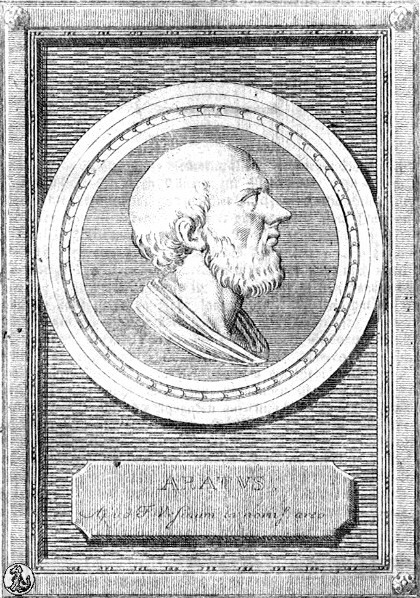
The Phaenomena is a didactic hexameter poem that details the constellations of the night sky and the diverse natural signs used to forecast the weather. Opening with a hymn to Zeus, who provides celestial markers to guide human affairs, the work systematically traces the northern and southern constellations along with their accompanying myths, such as the departure of Dike (Justice) from humanity. The poet then elucidates the primary circles of the celestial sphere—including the equator, the tropics, and the zodiac—and explains how the concurrent rising and setting of stars can serve to measure the passage of the night. In the second half, the focus shifts to meteorology, examining how atmospheric shifts can be anticipated through the appearances of the sun, the moon, and individual stars. The poem further catalogues a rich array of earthly omens, such as the erratic behavior of birds, beasts, and insects, as well as subtle changes in plant life, water, and domestic fire. In conclusion, Aratus emphasizes the necessity of cross-referencing multiple signs to achieve accurate predictions, urging readers to remain vigilant observers of the signs provided by the gods.