

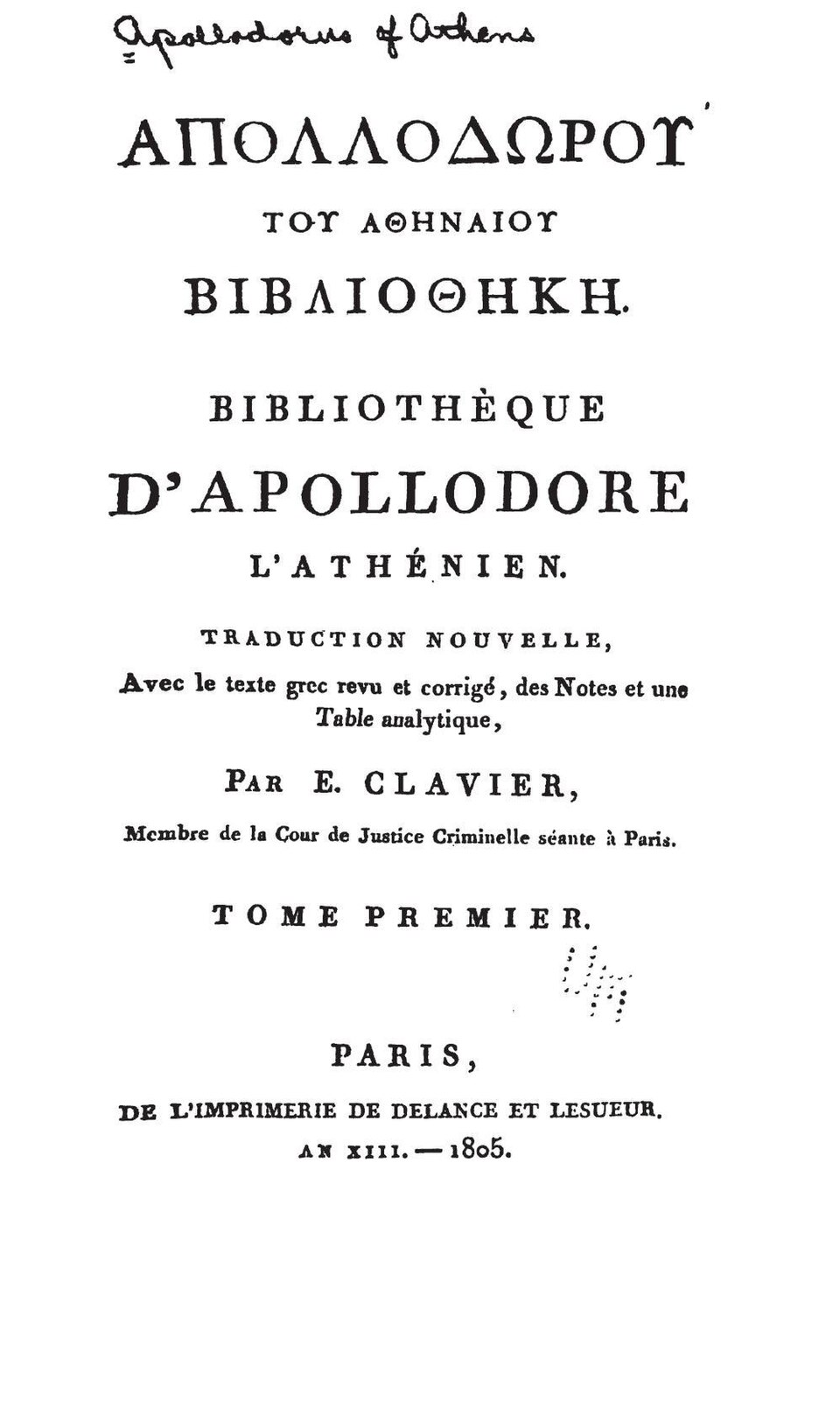
Pseudo-Apollodorus
Greek · Geography · Mythography
2 works · 8,062 aligned sentences
Bibliotheca
This work is a comprehensive mythological handbook in prose that systematically arranges the vast expanse of Greek myth, tracing the lineage from the creation of the cosmos down to the heroic age. It opens with the cosmogony and the successive accessions of power from Ouranos and Cronus to Zeus, detailing the great conflicts of the gods such as the Titanomachy and Gigantomachy, before describing Deucalion's flood and the repopulation of the earth. The narrative then chronicles the major epic cycles, including the voyage of the Argonauts, the exploits and twelve labors of Heracles along with the eventual return of the Heraclidae, and the tribulations of the Argive and Theban dynasties. It further follows the lineages of Arcadia, Sparta, and Troy, as well as the legendary early kings of Athens. The surviving text concludes as the young hero Theseus embarks on his journey to Athens, clearing the highway of monstrous perils and outlaws. Throughout, the work offers an orderly synthesis of diverse mythical variants, providing an extensive panoramic survey of the interlinked genealogies of gods and mortals.
Geography71 chunks · §1.1.1-1.1.7–§3.16.1-3.16.26,225 aligned sentencesRead →Epitome
This work, an epitome preserving the lost latter portion of the *Bibliotheca*, provides a comprehensive and methodical summary of Greek heroic myth, extending from the saga of Theseus to the Trojan War and the returns of the chieftains. The narrative begins with the exploits, kingship, and tragic death of Theseus in Athens, followed by the curse-laden dynastic struggles of the house of Tantalus. It then charts the entire course of the Trojan War, ignited by the Judgment of Paris, detailing the muster of the Greek expedition, the protracted siege, the death of Achilles, and the city's ultimate ruin through the stratagem of the wooden horse. The subsequent sections chronicle the perilous homecomings (*nostoi*), marked by shipwrecks, the murder of Agamemnon, and the vendetta of Orestes. The text concludes with the wandering of Odysseus, his eradication of the suitors, and diverse traditions regarding his demise, bringing the monumental heroic age to an orderly close.
Geography21 chunks · §1.1-1.9–§7.30-7.401,837 aligned sentencesRead →