

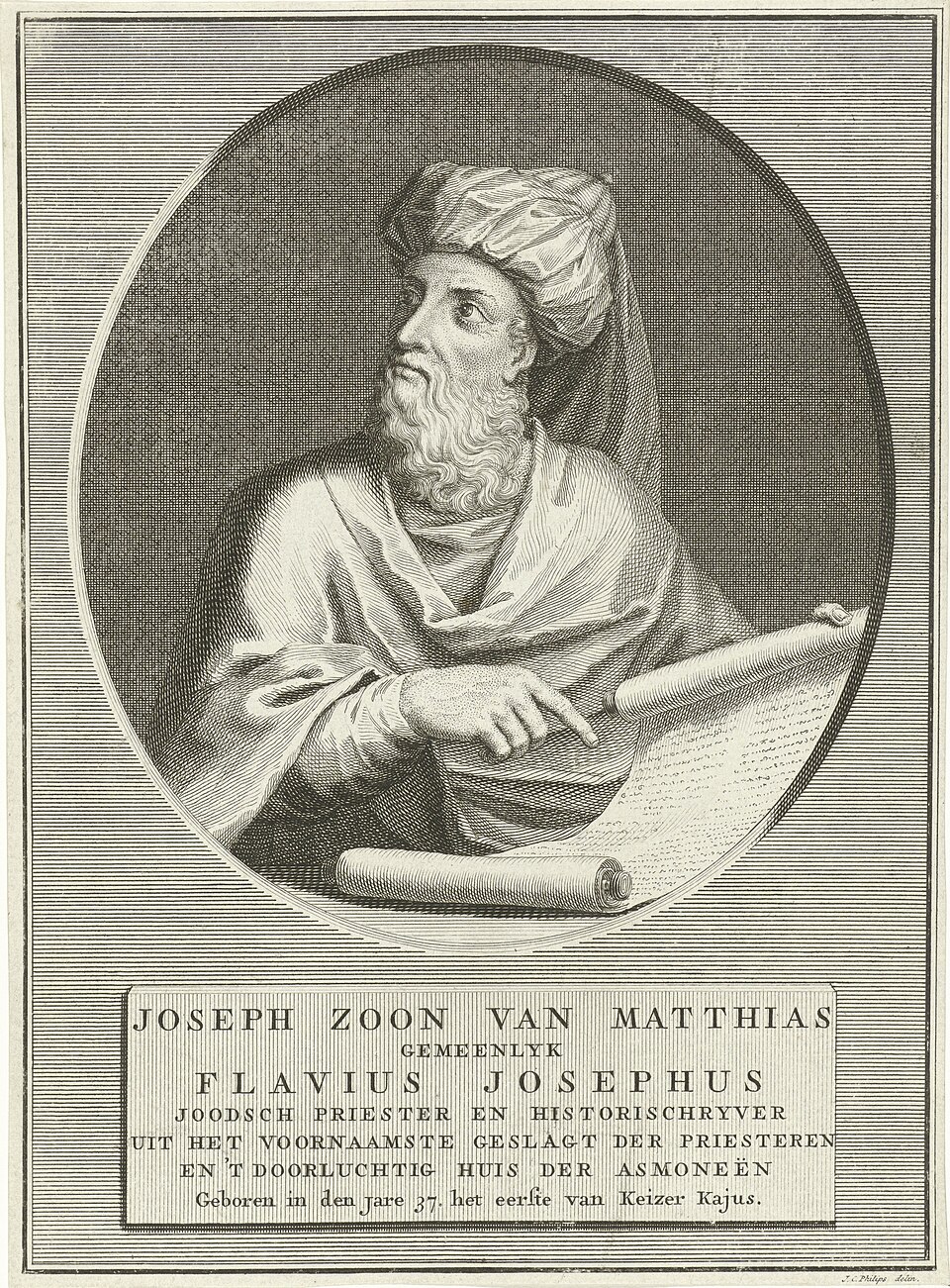
Flavius Josephus
Greek · Geography · Historiography · Record of War · Biography
3 works · 74,725 aligned sentences
Jewish Antiquities
The *Jewish Antiquities* is a monumental twenty-volume history written in Greek by Flavius Josephus, designed to present the origins, laws, and comprehensive history of the Jewish people to the Greco-Roman world. Beginning with the biblical account of creation, the patriarchs, and Moses leading the Exodus to institute the divine Law, the work frequently adapts Jewish tradition to philosophical and rational modes of thought accessible to Gentile readers. The narrative traces the conquest of Canaan, the glory and temple-building of Kings David and Solomon, the divided monarchy, the Babylonian exile, and the subsequent restoration, followed by the dramatic Maccabean revolt that established the Hasmonean dynasty. The later books chronicle Roman intervention, the ruthless rise and bloody family intrigues of Herod the Great, and Judea's turbulent transition into direct Roman provincial rule. The work concludes on the brink of the catastrophic First Jewish-Roman War, showing how the tyranny of Roman procurators and internal factional strife precipitated national revolt, before closing with a survey of the high-priestly succession and the author's reflections on his historical achievement.
Geography623 chunks · §1.arg-1.6–§20.255-20.26850,101 aligned sentencesRead →The Jewish War
This seven-book historical work chronicles the cataclysmic conflict between the Roman Empire and the Jewish people during the First Jewish-Roman War in the first century CE. The author, who initially commanded the Jewish defense in Galilee before being captured and becoming an eyewitness embedded with the Roman forces, begins by surveying the historical antecedents, from the Maccabean-Hasmonean period and the reign of Herod the Great to the oppressive misrule of Roman procurators. When open rebellion erupts in 66 CE, Josephus narrates his resistance, capture, and prophecy of Vespasian's imperial accession, which saves his life. The narrative reaches its devastating core in Titus's siege of Jerusalem, where brutal infighting among Jewish factions and horrific famine culminate in the conflagration of the Second Temple and the complete destruction of the holy city. The concluding books recount the lavish Roman triumph of Vespasian and Titus, followed by the siege of the desert fortress of Masada and the collective suicide of its Sicarii defenders. Balancing deep personal grief for his people with the conviction that Roman supremacy was ordained by divine providence, Josephus presents a haunting account of national ruin and human tragedy.
Geography250 chunks · §1.1-1.11–§7.439-7.45521,737 aligned sentencesRead →The Life of Flavius Josephus
This work is an autobiographical apologia in which Flavius Josephus, a Jewish historian and commander during the First Jewish-Roman War, recounts his lineage and deeds in Galilee to defend himself against the accusations of his rivals. Beginning with his noble priestly heritage and youthful education among the principal Jewish sects, Josephus narrates his early mission to Rome and the subsequent descent of Judea into inevitable war. The core of the narrative centers on his tenure as governor of Galilee, where he confronted relentless conspiracies and assassination attempts orchestrated by rivals such as John of Gischala and an investigative delegation sent from Jerusalem, countering them through political cunning and popular support. Josephus also engages in an extended polemic against the rival historian Justus of Tiberias, exposing the latter's historical fabrications, cowardice, and complicity in the revolt. Concluding with his experiences after the fall of Jerusalem, his relocation to Rome under the patronage of the Flavian emperors, and his domestic affairs, the work serves as a comprehensive vindication of his public conduct and historical truthfulness.
Geography32 chunks · §1-14–§419-4302,887 aligned sentencesRead →