

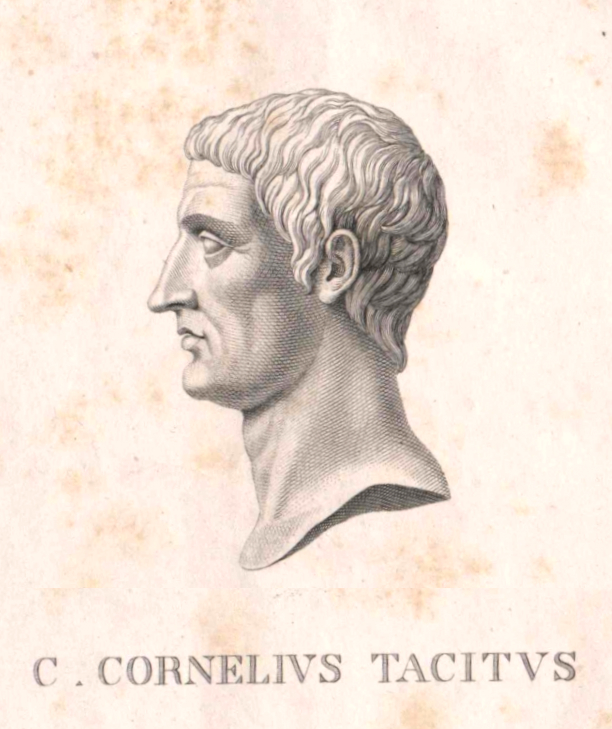
Tacitus
Latin · Geography · Ethnography
2 works · 3,060 aligned sentences
Birth: 56 AD / Death: 120 AD
Gallia Narbonensis → Roman Empire · historian · politician · military personnel
Agricola
This work is a biographical and historical tribute composed by the Roman historian Tacitus in honor of his father-in-law, Gnaeus Julius Agricola. Written shortly after the oppressive reign of Emperor Domitian gave way to the restoration of freedom, the text combines traditional biography with rich ethnographic and geographical accounts of Britain and its conquest. Tacitus chronicles Agricola’s early career and rise to prominence, culminating in his appointment as governor of Britain, where he pacified local tribes through military prowess, administrative fairness, and the introduction of Roman culture. The climax of his northern campaigns, the Battle of Mons Graupius, features the Caledonian leader Calgacus's fiery condemnation of Roman imperialism alongside Agricola's address to his soldiers, leading to a decisive Roman triumph and the circumnavigation of the island. Upon his recall to Rome, however, Agricola faces the hidden jealousy and suspicion of Domitian, navigating the hazards of autocracy with quiet moderation until his untimely and suspicious death. Tacitus concludes with a moving lament, arguing that dignified public service under tyranny is far nobler than ostentatious martyrdom, and vows that Agricola's virtue will endure perpetually through the written word.
Geography46 chunks · §1.1-1.4–§46.1-46.41,531 aligned sentencesRead →Germania
This work is an ethnographic and geographical treatise that offers a vivid account of the land of Germania beyond the Roman frontier, as well as the diverse tribes that inhabited it. The text is broadly divided into two parts: the first half examines the common features of the Germanic peoples, including their geography, mythological origins, religious practices, political assemblies, military tactics, and strict domestic morals; the second half systematically surveys individual tribes and their distinct ways of life. In the general survey, Tacitus depicts the Germans as an unmixed indigenous people endowed with physical hardiness, emphasizing institutions like the warrior retinue (comitatus) and rigorous marital fidelity, while also noting faults such as excessive drinking and peacetime indolence. The regional survey traces tribes from the Rhine and Danube frontiers to the Baltic coast and the northern ocean, showcasing groups such as the disciplined Chatti, the worshippers of the earth goddess Nerthus, and the seafaring Suiones. The work concludes by evaluating the impoverished, nomadic peoples of the eastern fringes, dismissing tales of fabulous hybrid beasts beyond them as uncertain, thereby leaving the reader with a striking portrait of a vast and formidable northern world that Rome had yet to subdue.
Geography46 chunks · §1.1-1.3–§46.1-46.61,529 aligned sentencesRead →