Unknown authorUnknown author · Public domain ↗
Latin · Others · Fable
1 work · 3,985 aligned sentences
Birth: 138 BC / Death: 70 BC
philosopher
Read more on Wikipedia ↗
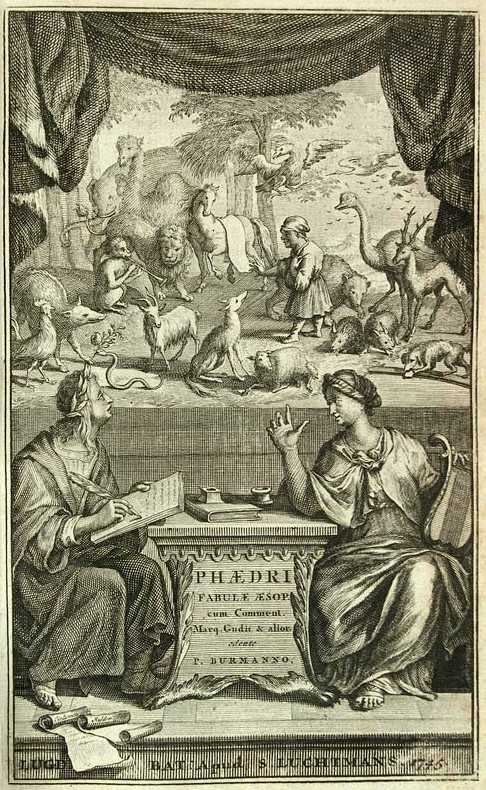
This collection of verse fables draws upon the tradition of Aesop to present a sharp, concise depiction of human folly, the abuses of power, and the realities of society. Written in verse, it features a diverse array of short narratives starring anthropomorphic animals, historical figures and rulers, everyday citizens, and Aesop himself. The earlier sections vividly capture the predation of the weak by the strong and the harshness of life through familiar animal tales, urging vigilance against arbitrary malice. As the books progress, the poet weaves in personal reflections, social satire, and moral anecdotes that expose the contrast between appearance and reality, the vanity of wealth, and the supreme worth of freedom over comfortable servitude. Ultimately, the work offers not grand illusions but practical, bittersweet wisdom, guiding the vulnerable to survive an unjust world through prudence, self-restraint, and keen wit.