Sailko · CC BY 3.0 ↗
Latin · Geography · Biography
1 work · 19,202 aligned sentences
Birth: 50 AD / Death: 100 AD
Africa · historian · writer · politician
Read more on Wikipedia ↗
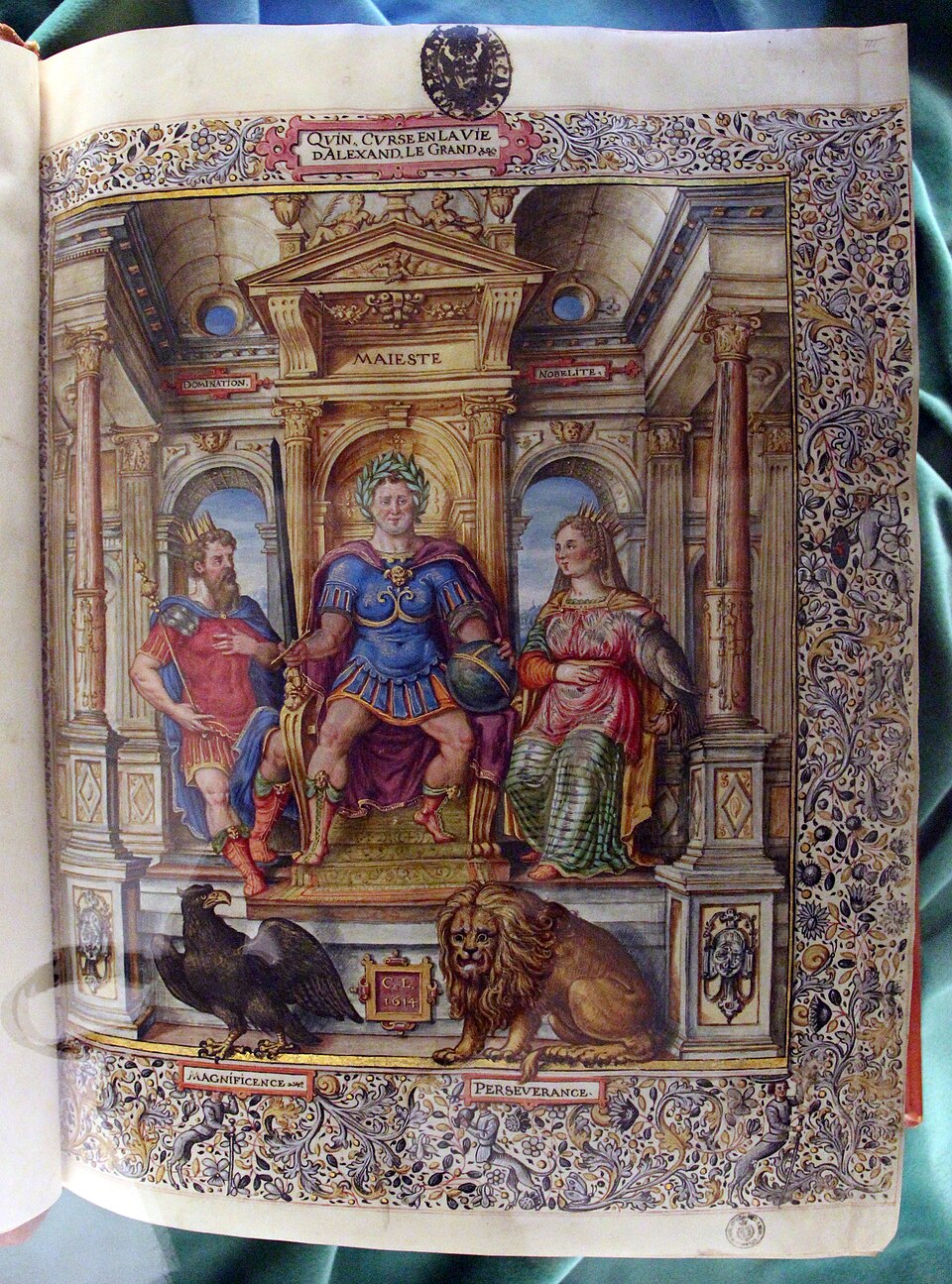
This historical work chronicles the eastern campaigns of Alexander the Great, tracing his extraordinary military conquests alongside his gradual descent into autocracy, as well as the tumultuous aftermath of his sudden death. Surviving from Book 3 onward, the narrative begins with the subjugation of Asia Minor, the decisive triumphs over the Persian king Darius III at Issus and Gaugamela, the pilgrimage to the oracle of Ammon in Egypt, and the capture of the Persian royal capitals. As his victories accumulate, Alexander adopts Persian luxury and court ceremonials such as proskynesis, fostering alienation among his Macedonian comrades and culminating in internal purges, including the execution of Philotas and the slaying of Cleitus. Although the king pushes his army into the harsh environments of Sogdiana and India, the mutiny of his exhausted soldiers compels him to turn back toward Babylon after reaching the Ocean. Following the demise of his closest companion Hephaestion, Alexander himself succumbs to a fatal illness in Babylon without naming a clear successor. The work concludes with the eruption of bloody discord between the infantry and cavalry commanders, depicting the violent unraveling and partition of the vast empire.