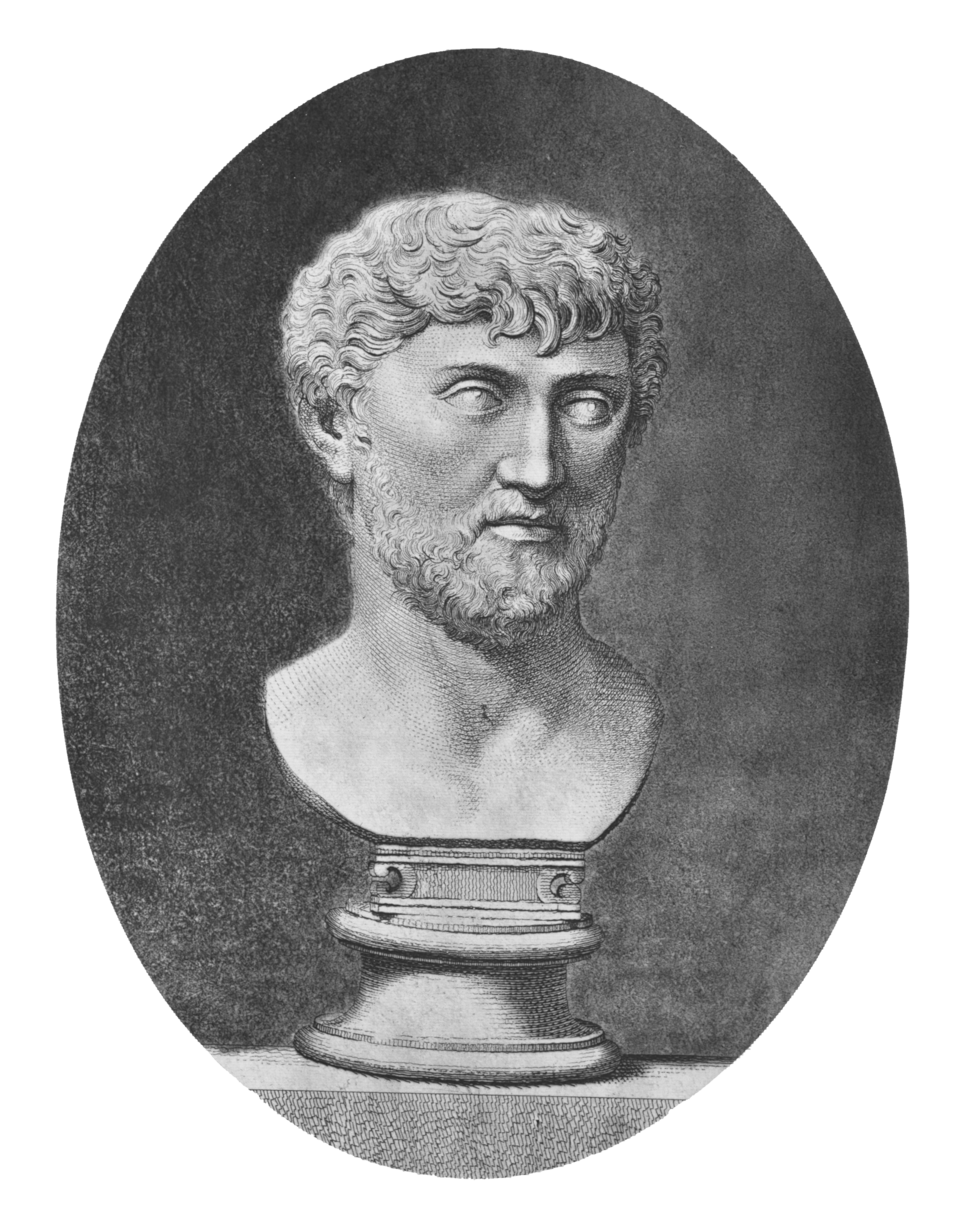
Unknown authorUnknown author · CC0 ↗
Latin · Philosophy · Ethics; Poetry · Didactic Poetry
1 work · 9,099 aligned sentences
*De Rerum Natura* (*On the Nature of Things*) is a Latin didactic epic poem by Lucretius, systematically presenting the atomistic physics and natural philosophy of the Greek philosopher Epicurus. Addressed to the Roman aristocrat Memmius, the work aims to liberate human minds from superstitious fears of the gods and death, thereby guiding the reader toward mental tranquility (*ataraxia*). The first two books establish the foundational principles of reality—namely, that nothing comes from nothing and nothing is reduced to nothing—arguing that the cosmos consists entirely of indivisible atoms moving through void, whose spontaneous swerve (*clinamen*) enables all generation and agency. The subsequent books demonstrate that the mind and soul are material and mortal, dissolving at death, while also exploring the physical mechanics of sensation, dreams, and the destructive folly of erotic passion. Lucretius then charts the natural creation and inevitable mortality of the world, tracing celestial motions and the progressive evolution of human culture without divine agency, followed by rational explanations of meteorology, earthquakes, and volcanism. The poem concludes with a harrowing and unsparing account of the plague of Athens, terminating amidst societal collapse to leave the reader confronting the austere, indifferent reality of nature.